Pula is a city of seventy thousand people with an amphitheatre in the middle and swimming at the end of every peninsula around it. That combination is rarer than it sounds: most Adriatic swimming means driving somewhere, and here it does not.

Punta Verudela
The headland south of the centre, and the busiest swimming in Pula. Hotels, rented loungers, bars, and a shoreline of low limestone slabs and small pebble inlets. The water is clear because it is limestone and there is no river anywhere near.
Come here if you want facilities within reach — a toilet, a coffee, somewhere to buy a drink without walking twenty minutes. Do not come expecting solitude; in July and August this stretch is full from mid-morning.
The coves on the point
The tip of the Verudela peninsula has a series of small inlets, some of them cut into the rock, with deeper water and ladders. The swimming is better than on the main stretch and the crowd thins the further you walk from the hotels.
The rock is smooth and gets slippery at the waterline. This is a place for water shoes and for taking the ladder rather than jumping in blind — depth varies fast.
Stoja and Valsaline
West and north of Verudela, closer to the city, and used more by people from Pula than by visitors. Shaded by pines, mixed slab and pebble, fewer facilities, and a completely different atmosphere in the evening when locals arrive after work.
If you want to see how the city actually uses its coast, go to one of these around six in the evening rather than to Verudela at noon.
Kamenjak, further south
The protected headland at the southern tip of Istria, half an hour from the city, is the best swimming in the region and deserves its own trip rather than an afternoon squeezed in. Unsurfaced roads, no facilities to speak of, dozens of coves, and cliffs at the end. There is an entry fee for cars in season.
Take everything you need with you: water, food, shade. That is the deal, and it is why the coves stay good.
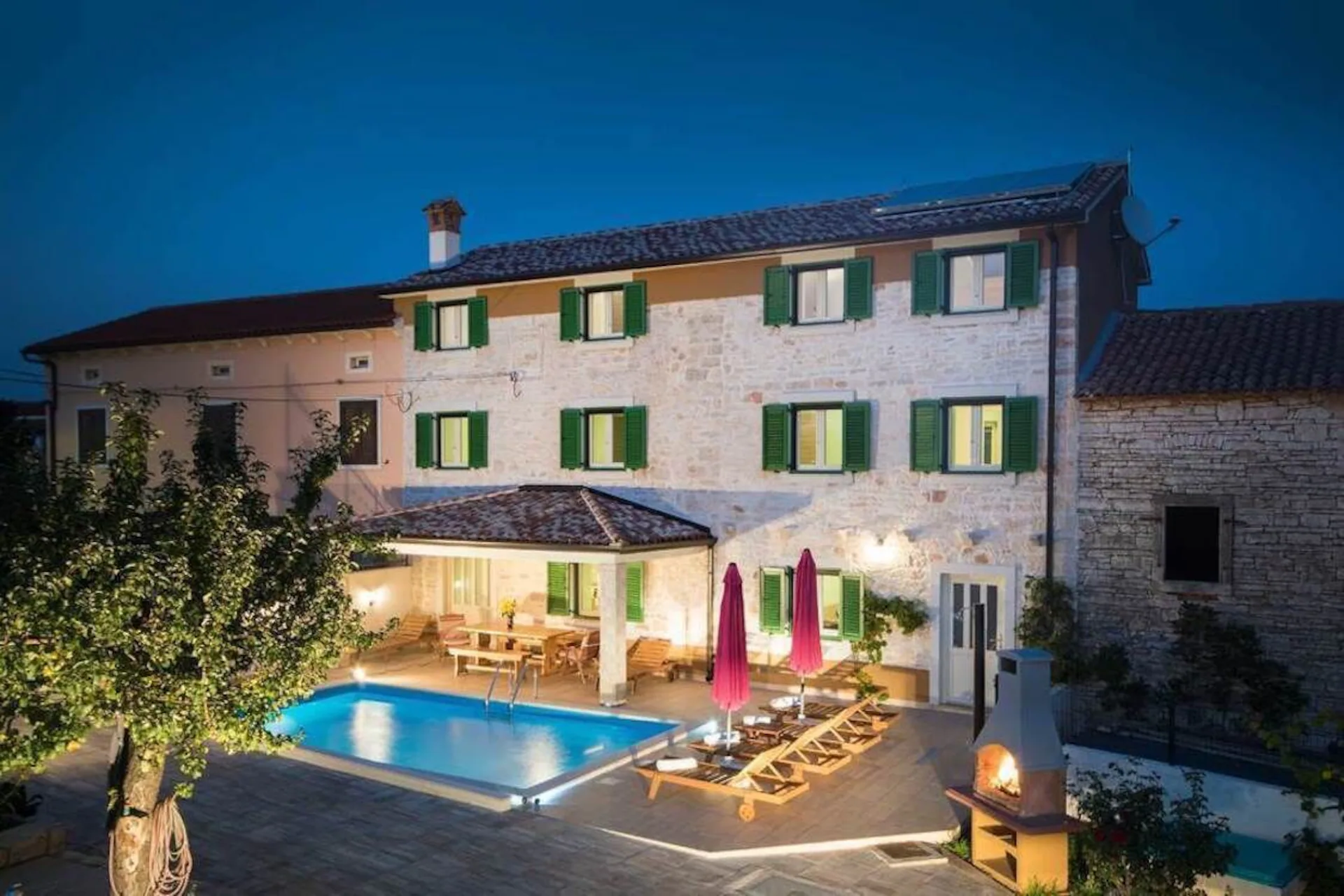
Where to stay
Villa Karla
Timing your day
The city beaches fill between ten and eleven and empty around six. If you have the freedom to choose, swim early and spend the middle of the day somewhere with walls and shade — the amphitheatre, the market, the old town — then come back to the water in the late afternoon when the light is low and the crowd has gone home.
Parking, the real constraint
Every beach around Pula is limited by parking rather than by space in the water. In peak season the car parks near the popular stretches are full well before midday and the roads leading to them become single-file. Arriving before nine or after five solves it; nothing else does.


