The amphitheatre at Pula was built in the first century, held something over twenty thousand people, and is still standing to its full height on the seaward side. It is the reason most people stop in Pula, and unusually for a headline sight, it repays the visit.

What actually survives
The outer wall is nearly complete — three storeys of arches, seventy-two of them, rising over thirty metres. What is largely gone is the interior seating: the stone was quarried for centuries to build the rest of the city, which is why you walk into a grass and gravel bowl rather than tiers of benches.
Pula's amphitheatre is the only one to keep all four of its side towers. Those towers held wooden staircases and, at the top, cisterns that fed a system for spraying scented water over the crowd. That detail tells you more about Roman spectacle than any reconstruction.

The underground passages
Beneath the arena floor are the corridors where animals and equipment were held. They now hold a small exhibition on olive oil and wine production in Roman Istria — amphorae, presses, and the trade that made this coast wealthy.
It is cool down there, which in July is not a minor advantage.
When to go
Early morning or the last hour before closing. The arena is an open bowl of pale stone with no shade at all; at two in the afternoon in August it is genuinely punishing, and you will walk round the edge quickly and leave without seeing much.
Early also means fewer people. Cruise-ship groups and coach tours arrive mid-morning and the bowl feels small when three of them are in it at once.
The concerts
It is still a working venue. In summer the arena hosts concerts and a film festival, with temporary seating on the floor. Watching a film projected against a two-thousand-year-old wall, with the swifts going over, is a better experience than the daytime visit — and tickets are usually easier to get than you would expect.
If your dates overlap with something, book it. It is the version of the arena that stays with you.
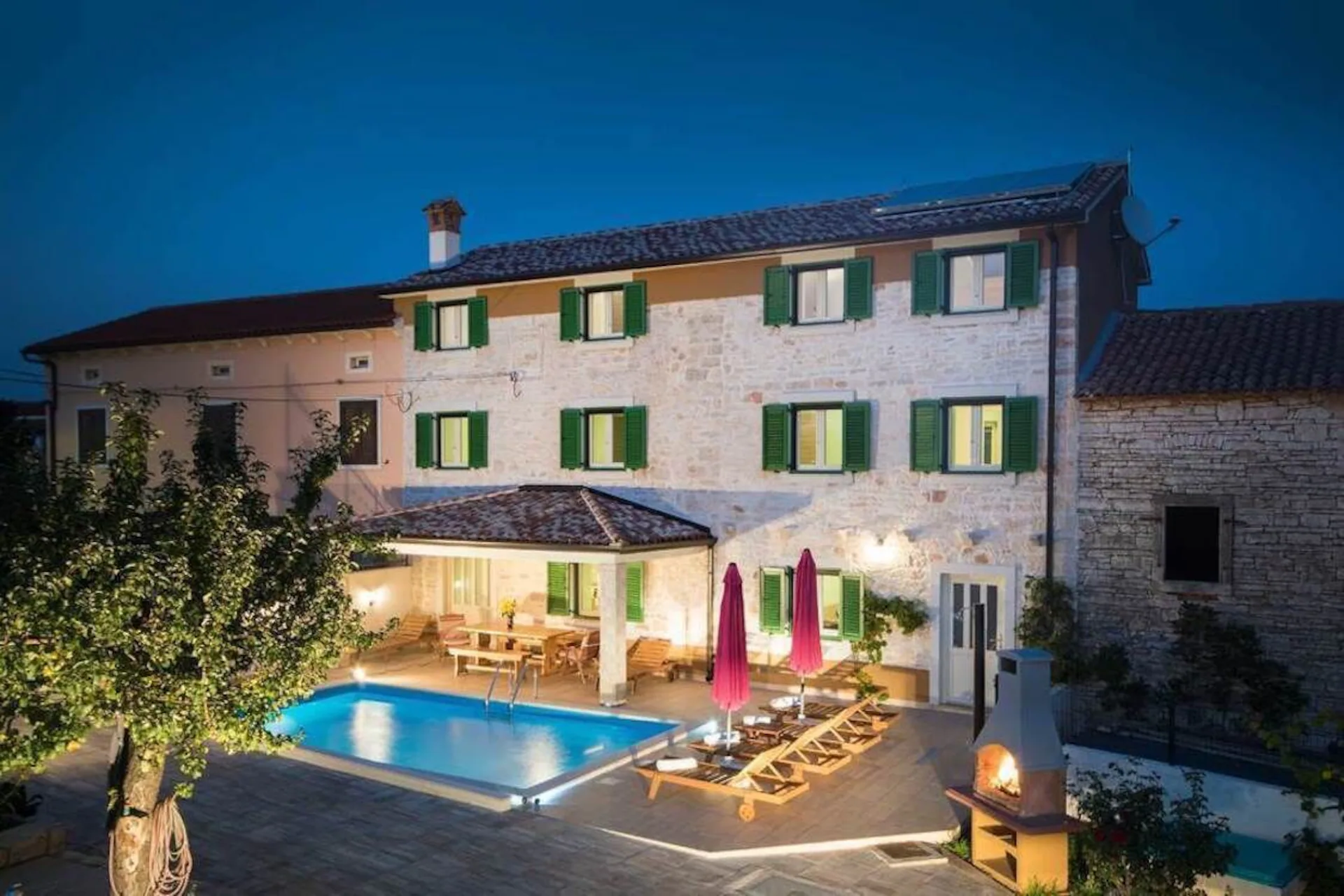
Where to stay
Villa Karla
The rest of Roman Pula
Do not stop at the amphitheatre. The Temple of Augustus stands in the old forum, which is still the main square; the Arch of the Sergii sits at the end of the shopping street; and fragments of the Roman street plan run under the whole old town.
All of it is within fifteen minutes on foot. An hour in the arena plus an hour wandering between the rest is a well-spent morning, and then the beaches at the edge of the city are ten minutes away.


