People arrive in Istria expecting sand and find white stones. It is worth knowing this before you book rather than at four o'clock on your first afternoon, because it changes what you pack and it changes which beach you choose.
Why there is no sand
The Istrian coast is limestone. Sand comes from rivers grinding rock down over long distances and dumping it at the coast; Istria has short rivers and a hard, soluble bedrock, so what reaches the shore is pebbles and slabs.
The upside is the reason people keep coming back: no sand means no suspended sediment, and no sediment means water you can see the bottom through at four metres. You cannot have both.

Three kinds of beach, and they are not the same
Fine pebble is the good stuff — stones the size of a fingernail, comfortable enough to lie on with a towel, easy to walk on. The organised beaches at the main resorts are mostly this, because it has often been imported and topped up.
Coarse pebble means stones the size of an egg. Walking on it barefoot is genuinely uncomfortable and lying on it needs a mat rather than a towel.
Rock slab is exactly that: flat limestone shelves with ladders into deep water. Superb for swimming, no good at all for a toddler, and slippery where algae grows at the waterline.
Three things to bring
Water shoes, for everyone. This is the single item that changes a holiday here. Sea urchins live on rocky bottoms and their spines break off in your foot; the stones are sharp where they have not been rounded; and the walk from towel to water is often the least pleasant part of the day without them.
A mat or a thick towel — a beach towel over coarse pebbles is not padding, it is a thin layer between you and gravel.
And something for shade if you are going to a wild cove. The organised beaches have umbrellas to rent; the coves that are worth walking to have nothing at all.
Where to stay
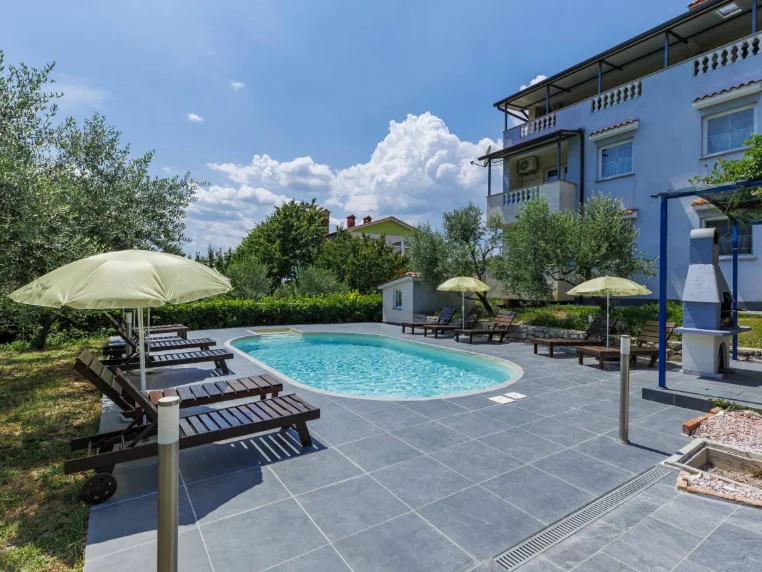
Apartment Gordana
With small children
Look for beaches where the shelf is gradual rather than steep. It varies enormously from cove to cove along the same stretch of coast — in one you are out of your depth after four steps, in the next you can wade a long way.
Inflatable armbands plus water shoes plus a shaded spot is the workable combination. And go early: the family-friendly coves are the ones everyone else has also identified, and by half past ten in August the good shade is taken.
About sea urchins
They are common on rocky bottoms and around harbour walls, and they are not aggressive — you only get hurt by standing on one. Water shoes solve it. If a spine does break off, it is painful rather than dangerous, and a pharmacy will tell you what to do.


