From Utrecht to Istria is roughly 1,300 kilometres. It is a long day for two drivers and an unpleasant one for a single driver with children in the back. The good news is that it is nearly all motorway and the route is simple.
Two routes, one decision
The usual line runs Netherlands – Germany – Austria – Slovenia – Croatia: down through Cologne and Frankfurt, over the Alps through Austria, then Ljubljana and into Istria from the north. This is the standard, and it is the fastest when the Austrian motorways behave.
The alternative goes through Switzerland or over the Brenner into Italy and along the Adriatic through Trieste. It is a comparable distance and it avoids the worst of the Austrian holiday traffic, at the cost of Swiss or Italian tolls and, on the Italian side, a stretch of road that is busy in its own right.
Pick by traffic, not by distance. On the Saturdays either side of the German school holidays the Austrian Alpine corridor is the single worst stretch of road in Europe, and losing three hours there wipes out any theoretical saving.

Vignettes and tolls
Austria requires a vignette. Buy it before the border — online at least a few days ahead, or at a filling station on the German side — and note that the digital version is linked to your plate. Austria's Alpine tunnels carry separate charges on top of the vignette.
Slovenia also requires a vignette, sold in weekly and monthly form, and even a short transit needs one. It is a very small country to cross and a very reliable place to be fined.
Croatia charges conventional tolls at barriers on its motorways; you take a ticket and pay on exit, by card or cash. There is no vignette.
How long it really takes
Twelve to fourteen hours of driving plus stops, so figure on fifteen hours door to door in good conditions. In practice, families who leave in the early hours arrive in the evening, and families who leave after breakfast arrive at midnight and regret it.
The alternative that works well is breaking the journey — somewhere around Munich or Salzburg, or in Slovenia, which turns a brutal day into two comfortable ones and gets you into Istria in the morning with the whole day ahead.
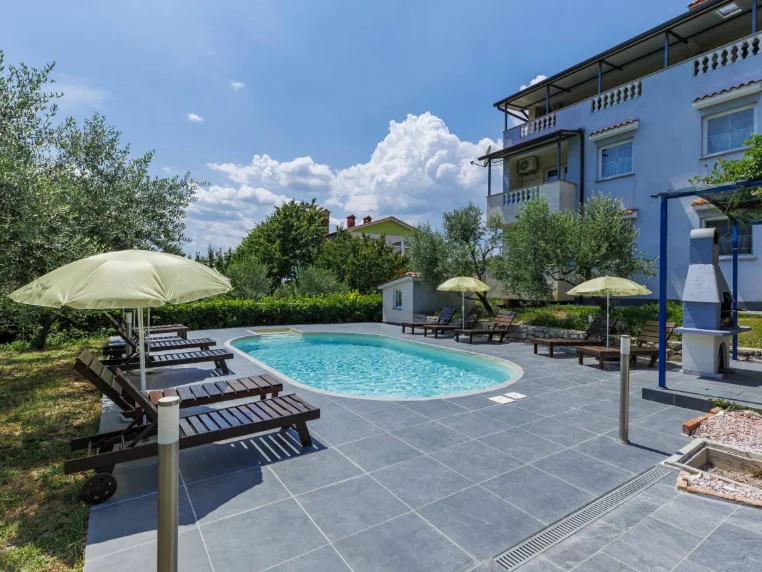
Where to stay
Apartment Gordana
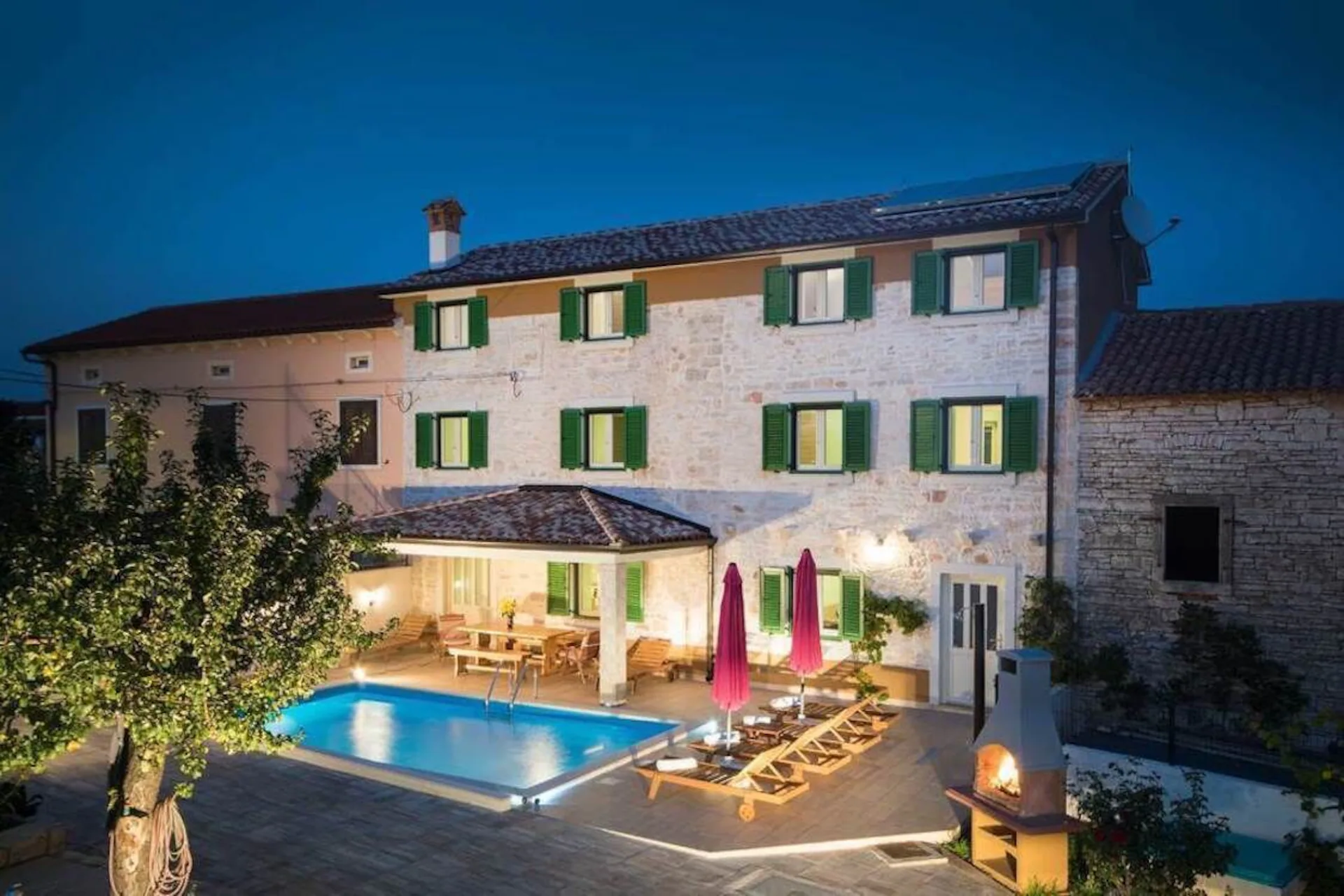
Where to stay
Villa Karla
Why the last hour is slower
Once you leave the Croatian motorway, the roads become two-lane, winding and slow through villages. A final forty kilometres that looks like half an hour is closer to an hour, more if you are following a lorry over the ridge.
The Učka tunnel, if your route comes in from Rijeka, is a toll tunnel and worth taking rather than driving over the mountain — the pass road is beautiful and adds a long time.
Practical points
Carry a warning triangle, a high-visibility vest and a first-aid kit; requirements vary by country along this route and the combination above covers all of them. Headlights during the day are compulsory in Slovenia and Croatia outside summer months.
Fuel is generally cheaper in Slovenia than in Austria, Italy or Croatia — a full tank there is worth planning for.
And if you are driving with a boot full of holiday shopping, keep in mind that the return leg on a Saturday in August is exactly as busy as the outbound one. Leaving on a weekday costs nothing and saves hours.


