Istria was Venetian for five hundred years and Italian until 1947, and the food shows it. What arrives on the table is closer to Friuli than to the Balkans, made with what grows on a limestone peninsula: olive oil, wild herbs, pork, fish and truffle.

Konoba, restoran, gostionica
A konoba was originally a cellar where wine was kept, and now means a simple, usually family-run place with a short menu of local dishes. It is where you want to eat.
Restoran is a full restaurant, often larger and with a broader menu. Gostionica is an inn — somewhere between the two. None of these are quality grades; a konoba can be excellent or ordinary, and the reliable signal is whether local people are eating there.
The pasta
Fuži are the Istrian shape: a square of dough rolled into a tube on the diagonal. Pljukanci are hand-rolled and slightly twisted. Both are served with truffle, with game sauce, or with asparagus in spring.
Order fuži with truffle at least once, in season. It is the regional dish and it is very hard to do badly.
Meat
Boškarin is the Istrian ox, a huge grey draught animal that nearly died out and was brought back deliberately. Slow-cooked or as a cured meat, it is the region's most distinctive meat and worth ordering when you see it.
Otherwise: pork, lamb, and anything from the open fire. Ombolo is cured pork loin; pršut is the local air-dried ham, drier and firmer than the Italian version because of the bura wind. Maneštra is the everyday soup-stew of beans, maize and whatever else, and is the single most Istrian thing on any menu.
Fish, and how it is priced
Whole fish is sold by the kilo, not by the portion. The waiter brings the fish to the table, you choose one, it is weighed and grilled whole with olive oil and parsley.
Ask the price per kilo and the weight of the fish before you agree. This is completely normal and nobody will think you rude — the misunderstandings that end in an argument at the end of a meal all start with skipping this step.
Buzara is the other classic: shellfish cooked in white wine, garlic and breadcrumbs, served in the pan, eaten with bread. Order it for the table.
Where to stay
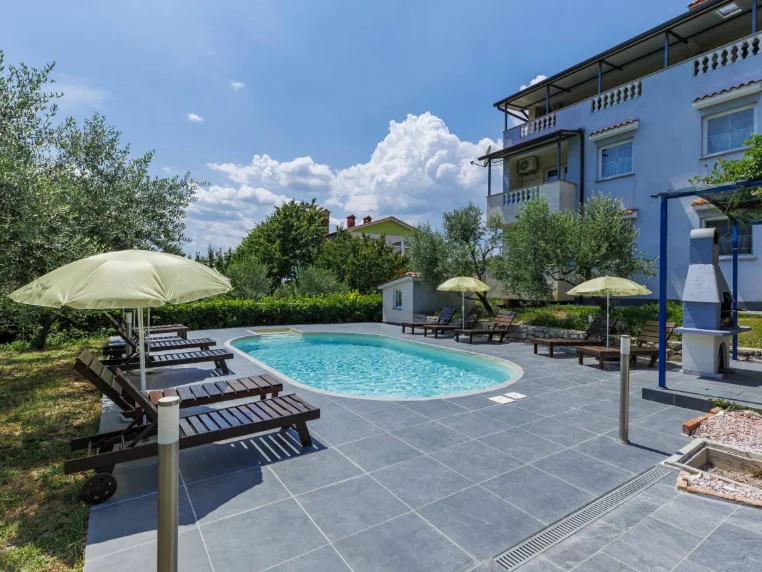
Apartment Gordana
Where to stay
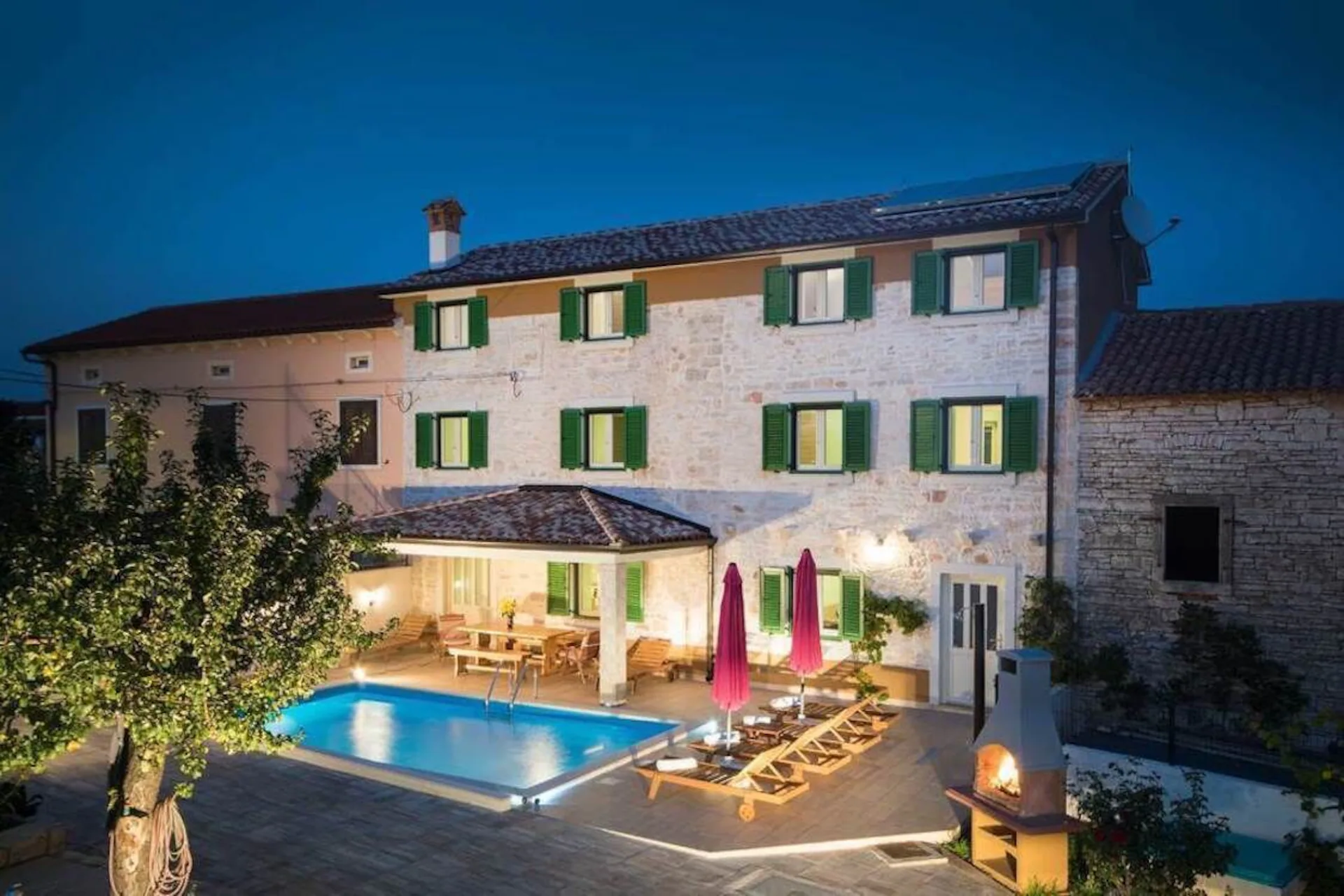
Villa Karla
Olive oil
Istrian olive oil is regularly ranked among the best in the world and the region takes it extremely seriously. Many producers sell direct and most will let you taste before you buy.
It is one of the few things genuinely worth carrying home in your luggage. Buy from a producer rather than a supermarket, and buy the current harvest.

Practical
Dinner starts late — eight is normal, and many kitchens are still busy at ten. Booking is sensible in July and August, especially for the small places.
Tipping is not obligatory; rounding up or leaving around ten percent for good service is the usual practice. Cards are accepted nearly everywhere, though the smallest konobas inland may still prefer cash.


